Have you ever wondered, “What is
the importance of the different ancient civilizations of the world,
particularly the classical civilizations?” The Greeks, the Romans and the
Byzantine are just some of those classical civilizations who have been the
modern world’s “pillars”.

Greeks have been known throughout the ancient world since ancient times. They have contributed greatly in the field of arts. Greeks are found to be famous in the different aspects of art. Paintings on walls (frescoes), jars and other artifacts prove to be the “pillars” of Greece itself. Different forms art such as the Archaic, the Classical and the Hellenistic have exercised an enormous influence throughout the ancient and modern times, usually in sculpture and architecture. Their form of art was also presented in the different architectures of their houses, buildings and monuments. Greeks also were famous for their art in literature and language, which later contributed to the development of theater today. Some examples of these artworks are the epics Iliad and Odyssey that was written by Homer, the drama called Oedipus by Sophocles and among others. Greeks also have contributed to both education (particularly mathematics and sciences) and philosophy. The famous Pythagorean Theorem that is very useful in finding the lengths of a right triangle was developed by Pythagoras, a Greek. Lastly, the Greeks were the first to come up with the Olympics, which is held every 4 years.

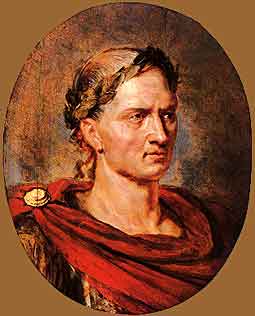 The Byzantine Empire was just a mix
of the Greek and Roman culture or Greco-Roman culture. The empire’s knowledge
in arts, literature, mathematics, laws, and philosophy were shared in the West,
which later helped the Renaissance period to be successful. Also, the empire is
rich with the different artifacts such as mosaics, domes and among others.
Lastly, the empire helped spread the religion Christianity throughout the
world.Every classical civilization has
either both same and different contributions to our society today. Most
importantly, they are a source of a many fascinating history, which we need to
give importance. They have proved themselves that some of them are the pillars
of our world today. Truly, we must be
thankful, because without them and their influence, we wouldn’t be ourselves
today, in this world, in this century.
The Byzantine Empire was just a mix
of the Greek and Roman culture or Greco-Roman culture. The empire’s knowledge
in arts, literature, mathematics, laws, and philosophy were shared in the West,
which later helped the Renaissance period to be successful. Also, the empire is
rich with the different artifacts such as mosaics, domes and among others.
Lastly, the empire helped spread the religion Christianity throughout the
world.Every classical civilization has
either both same and different contributions to our society today. Most
importantly, they are a source of a many fascinating history, which we need to
give importance. They have proved themselves that some of them are the pillars
of our world today. Truly, we must be
thankful, because without them and their influence, we wouldn’t be ourselves
today, in this world, in this century.